5 Series E39 vs 7 Series E38: which is better?
BMW 5 Series E39 (1995–2003) vs BMW 7 Series E38 (1994–2001): specs, fuel economy, tax and common problems.
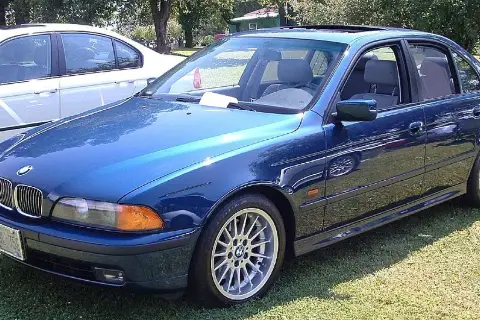 BMW 5 Series E39
Specifications
| BMW 5 Series E39 | BMW 7 Series E38 | |
|---|---|---|
| Production years | 1995–2003 | 1994–2001 |
| Body | sedan | sedan |
| Fuel | petrol | petrol |
| Engines | 2.5 (525i) | 3.5 V8 (735i) |
| Power, up to | 192 hp | 235 hp |
| Torque, up to | 245 Nm | 320 Nm |
| Gearbox | automatic | automatic |
| Drive | rear-wheel drive | rear-wheel drive |
| Length | 4 775 mm | 5 024 mm |
| Width | 1 800 mm | 1 862 mm |
| Height | 1 435 mm | 1 435 mm |
| Wheelbase | 2 830 mm | 2 930 mm |
| Fuel tank | 70 L | 85 L |
| KZ tax 2026 (car under 10 years) | ≈ 29 450 ₸ | ≈ 68 375 ₸ |
The better value is highlighted in green.
Pros, cons and common problems
BMW 5 Series E39
Pros
- Powerful versions: up to 192 hp
- Conventional automatic, no robotized gearbox or CVT
- Large tank: 70 L
- Sold in all major markets of the region — parts and mechanics available
Cons
- Engine BMW M52/M54 (2.0–3.0): oil consumption (rings)
- Age: the last cars were built in 2003, condition is everything
Engine (BMW M52/M54 (2.0–3.0)): oil consumption (rings); crankcase ventilation system failure; cracked expansion tank and thermostat.
BMW 7 Series E38
Pros
- Powerful versions: up to 235 hp
- Conventional automatic, no robotized gearbox or CVT
- Large fuel tank: 85 L
- Sold in all major markets of the region — parts and mechanics available
Cons
- Gearbox ZF 5HP/6HP: bushing and mechatronics wear
- Age: the last cars were built in 2001, condition is everything
Gearbox (ZF 5HP/6HP): bushing and mechatronic wear; shift shocks.
Which one to choose
- 5 Series E39 — if you care more about: kz tax 2026.
- 7 Series E38 — if you care more about: power, torque, wheelbase, fuel tank.
The condition of a specific car matters more than the model: check the service history and get the engine and gearbox inspected before buying.
FAQ
Which is more powerful: 5 Series E39 or 7 Series E38?
5 Series E39: up to 192 hp, 7 Series E38: up to 235 hp.
What is the vehicle tax in Kazakhstan?
For 2026, for a car under 10 years old: 5 Series E39 — about 29 450 ₸, 7 Series E38 — about 68 375 ₸ (base engine). A 0.7 factor applies to cars aged 10–20 years and 0.5 to cars over 20.