Nexia R3 vs Logan II: which is better?
Chevrolet Nexia R3 (2016–2023) vs Renault Logan II (2014–2022): specs, fuel economy, tax and common problems.
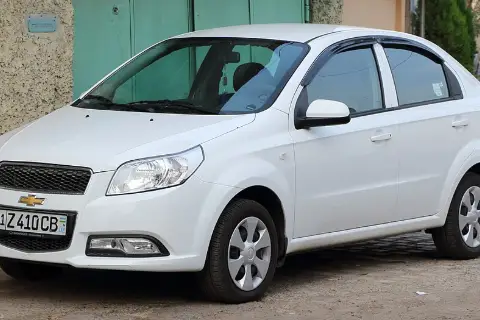 Chevrolet Nexia R3
Specifications
| Chevrolet Nexia R3 | Renault Logan II | |
|---|---|---|
| Production years | 2016–2023 | 2014–2022 |
| Body | sedan | sedan |
| Fuel | petrol | petrol |
| Engines | 1.5 (B15D2) | 1.6 16V |
| Power, up to | 106 hp | 113 hp |
| Torque, up to | 134 Nm | 152 Nm |
| Gearbox | automatic | manual |
| Drive | front-wheel drive | front-wheel drive |
| Length | 4 310 mm | 4 359 mm |
| Width | 1 710 mm | 1 733 mm |
| Height | 1 505 mm | 1 517 mm |
| Wheelbase | 2 480 mm | 2 634 mm |
| Ground clearance | — | 155 mm |
| Fuel tank | 45 L | 50 L |
| KZ tax 2026 (car under 10 years) | ≈ 8 650 ₸ | ≈ 13 675 ₸ |
The better value is highlighted in green.
Pros, cons and common problems
Chevrolet Nexia R3
Pros
- Conventional automatic, no robotized gearbox or CVT
- Local assembly: Uzbekistan
- Sold in all major markets of the region — parts and mechanics available
Cons
- GM B15D2 engine (1.5, Cobalt/Nexia): valve cover gasket leak
- GM 6T30/6T40/6T45 etc. gearbox: 3-5-R clutch pack wave spring failure (6T40/6T45)
- Small tank: 45 L
Engine (GM B15D2 (1.5, Cobalt/Nexia)): valve cover gasket leak; timing belt wear; hydraulic lifter tapping when cold.
Gearbox (GM 6T30/6T40/6T45, etc.): broken wave spring in the 3-5-R clutch pack (6T40/6T45); jerks when the valve body wears.
Renault Logan II
Pros
- Local assembly: Russia
Cons
- Nissan/Renault HR16DE / H4M (1.6) engine: chain stretch at high mileage
Engine (Nissan/Renault HR16DE / H4M (1.6)): no widespread serious problems; chain stretch at high mileage.
Which one to choose
- Nexia R3 — if you care more about: kz tax 2026.
- Logan II — if you care more about: power, torque, wheelbase, fuel tank.
The condition of a specific car matters more than the model: check the service history and get the engine and gearbox inspected before buying.
FAQ
Which is more powerful: Nexia R3 or Logan II?
Nexia R3: up to 106 hp, Logan II: up to 113 hp.
What is the vehicle tax in Kazakhstan?
For 2026, for a car under 10 years old: Nexia R3 — about 8 650 ₸, Logan II — about 13 675 ₸ (base engine). A 0.7 factor applies to cars aged 10–20 years and 0.5 to cars over 20.