Kuga II vs H6 I: which is better?
Ford Kuga II (2012–2019) vs Haval H6 I (2011–2017): specs, fuel economy, tax and common problems.
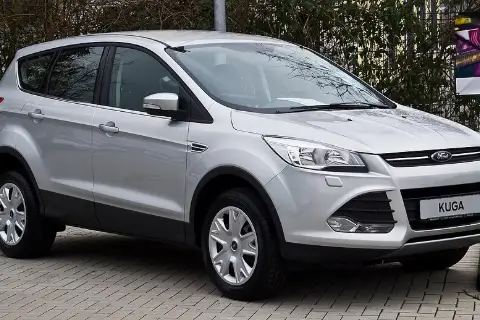 Ford Kuga II
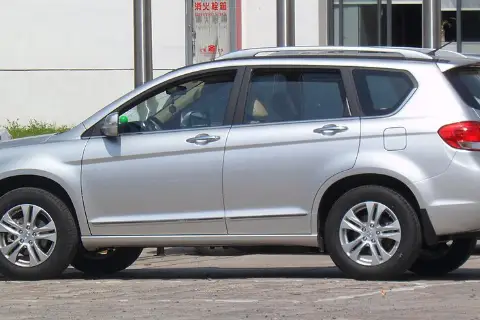 Haval H6 I
Specifications
| Ford Kuga II | Haval H6 I | |
|---|---|---|
| Production years | 2012–2019 | 2011–2017 |
| Body | crossover SUV | crossover SUV |
| Fuel | petrol | petrol |
| Engines | 1.6 EcoBoost | 1.5 Turbo |
| Power, up to | 150 hp | 150 hp |
| Torque, up to | 240 Nm | 210 Nm |
| Gearbox | automatic | manual |
| Drive | all-wheel drive | front-wheel drive |
| Length | 4 524 mm | 4 640 mm |
| Width | 1 838 mm | 1 825 mm |
| Height | 1 702 mm | 1 690 mm |
| Wheelbase | 2 690 mm | 2 680 mm |
| Fuel tank | 60 L | 66 L |
| KZ tax 2026 (car under 10 years) | ≈ 13 675 ₸ | ≈ 8 650 ₸ |
The better value is highlighted in green.
Pros, cons and common problems
Ford Kuga II
Pros
- All-wheel-drive versions available
- Conventional automatic, no robotized gearbox or CVT
- Sold in all major markets of the region — parts and mechanics available
Cons
- Ford Duratec/Zetec/EcoBoost engine: Duratec suffers timing belt and ignition coil wear
- Ford 6F35/6F50/4F27E gearbox: valve body and solenoid wear
Engine (Ford Duratec/Zetec/EcoBoost): on Duratec — timing belt and ignition coil wear; on EcoBoost — overheating and coolant leaks on the 1.6.
Gearbox (Ford 6F35/6F50/4F27E): valve body and solenoid wear; shift shocks.
Haval H6 I
Pros
- Local assembly: Russia
- Sold in all major markets of the region — parts and mechanics available
Cons
- GWM / Haval (1.5T, 2.0T) engine: complaints of fuel dilution of oil in winter and software issues
- Front-wheel drive only
Engine (GWM / Haval (1.5T, 2.0T)): data limited; complaints about fuel dilution of oil in winter and software behavior.
Which one to choose
- Kuga II — if you care more about: torque, wheelbase.
- H6 I — if you care more about: fuel tank, kz tax 2026.
The condition of a specific car matters more than the model: check the service history and get the engine and gearbox inspected before buying.
FAQ
Which is more powerful: Kuga II or H6 I?
Kuga II: up to 150 hp, H6 I: up to 150 hp.
What is the vehicle tax in Kazakhstan?
For 2026, for a car under 10 years old: Kuga II — about 13 675 ₸, H6 I — about 8 650 ₸ (base engine). A 0.7 factor applies to cars aged 10–20 years and 0.5 to cars over 20.